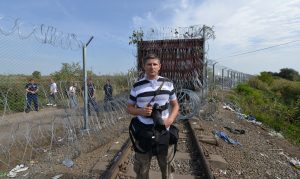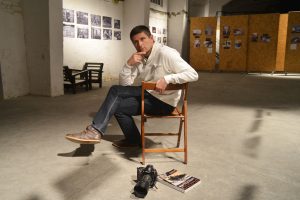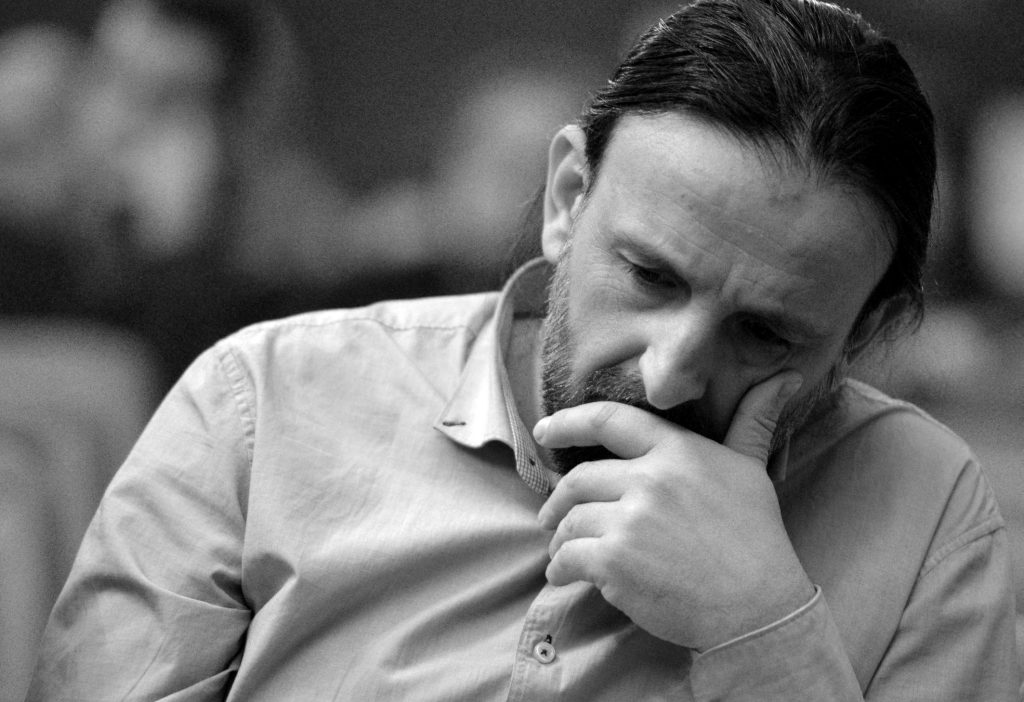
Darko Dozet is the Nikoletina Bursać* of our time—only he carries a camera instead of a machine gun. This towering man, covered with unusual equipment and dark camera lenses, would appear unexpectedly, as if out of nowhere, in Kosovo and Metohija.
It has been recorded that since 1998, his photographs have often been the only information, the primary source, the professional testimony, and the voice of a world that was disappearing.
Yet, above all, there stands an artistic nature that, for decades, has sought to maintain a distance from the evil witnessed by spirit, eye, and camera. If it were not for Darko Dozet—who, with an instinct as precise as fate, has captured and frozen tragedy and time into the art of photography—we might have been swallowed by the void of a destroyed grave in Đakovica, our words scattered by the wind together with the cries and pain of the bereaved.
A special layer of the Kosovo photographic cycle is reflected in the author’s exploration of a particular kind of solitude—the one that emerges after devastation. Biblical faces, people, and landscapes stand in a restless search for alliance, for a new beginning, for a fragment of life. They are placed within the frame of a global world—one marked by barbed wire, weapons, and universal symbols—a world redrawn in apathetic solitude, shaped by injustice, fear, and personal interests.
A Serb from Kosovo looks through a bullet hole that was meant for him only days before. He looks through his own near-death and believes that Darko Dozet—that kind-hearted Nikoletina—through a photographic “shot,” frees him from solitude and from an untold history.
Živojin Rakočević
Journalist and writer
*Nikoletina Bursać is a character from the novels about World War II by Branko Ćopić,
Serbian writer born in Bosnia and Herzegovina. Nikoletina was a Yugoslav partisan
machine-gunner, a corpulent, tough and courageous man with a noble and gentle heart.